Students
- CASP Requirements
- Events
- Peer Mentorship Program
- CLCs
"The fundamental task of the mentor is a liberatory task. It is not to encourage the mentor’sgoals and aspirations and dreams to be reproduced in the mentees, the students, but to give rise to the possibility that the students become the owners of their own history.” Educators, “[sic] have to transcend their merely instructive task and to assume the ethical posture of a mentor who truly believes in the total autonomy, freedom, and development of those he or she mentors." (Freire, 1960)
Peer mentoring is a form of mentorship that happens between a person who has already had, or lived through a particular experience (peer mentor), and a person who is new to that experience (the mentee). An example would be an experienced student being a peer mentor to a new student, the mentee.
Peer mentoring provides individuals who are new to an experience (in our case, being a UCSD student), the chance to learn from those who have already had some experience going through the process (you, having had more time as a UCSD student). Peer mentors may challenge the mentee with new ideas, and encourage the mentee to move beyond the things that are most comfortable, or familiar with. Most peer mentors are selected for their sensibility, confidence, social skills and reliability. (Bozeman, 2007)
Peer mentoring in education was first promoted and introduced in the 1960s by educator and theorist Paulo Freire. CASP uses peer mentorship as an additional tool for success for students so that they may have access to an additional resource to aid them in their academic achievement, personal, and student development.
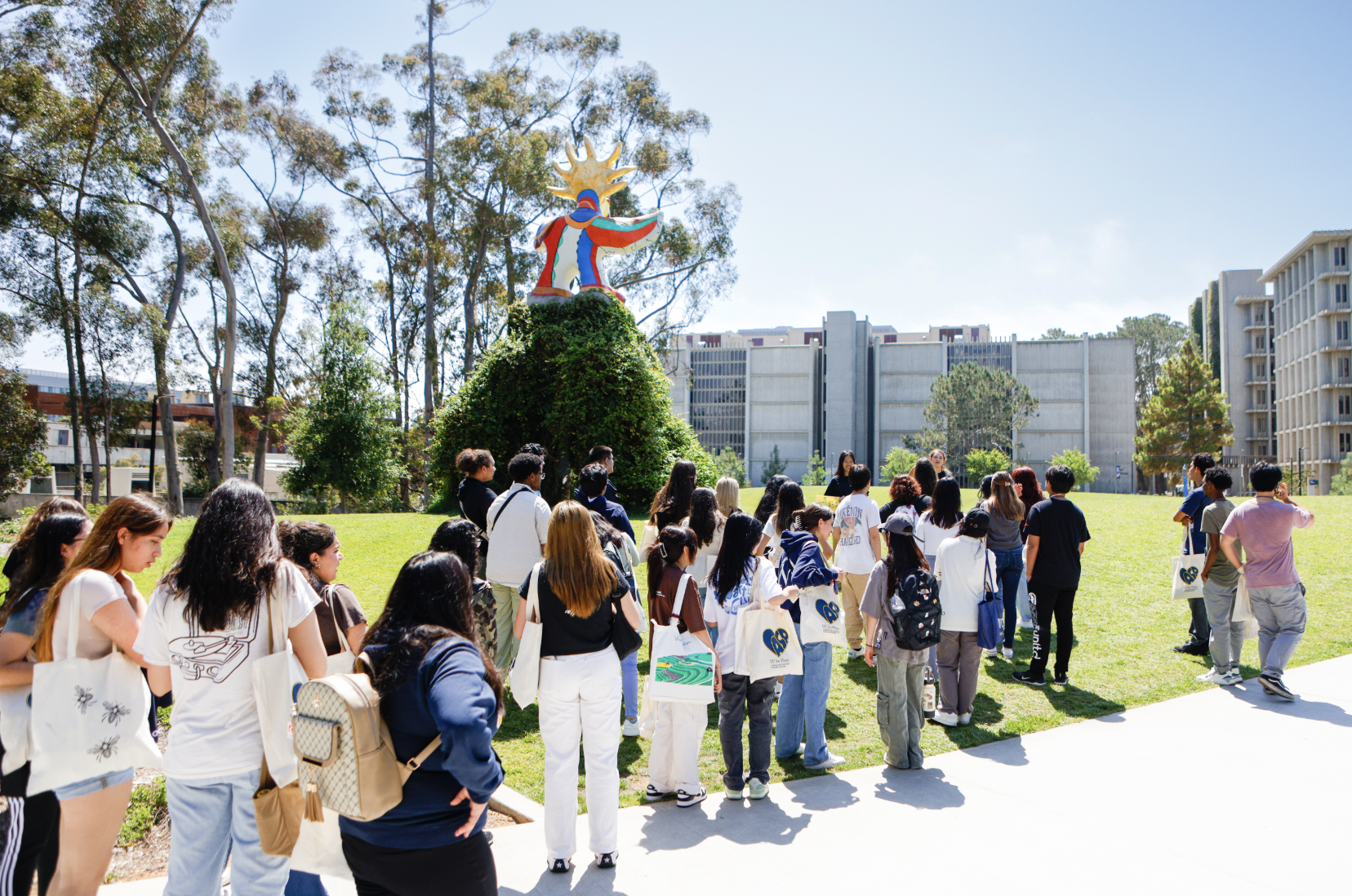
To provide this support, CASP partners with Mentor Collective to connect first-time first-year and incoming transfer students with trained peer mentors during their first year at UC San Diego. Through this partnership, new scholars are matched with experienced UC San Diego students who can offer guidance, encouragement, and insight as they navigate the academic, personal, and social aspects of their transition. These mentoring relationships help scholars build community, develop a sense of belonging, identify campus resources, and feel more confident navigating their first year.
In accordance with applicable Federal and State law and University policy, the University of California does not discriminate, or grant preferences, on the basis of race, color, national origin, religion, sex, disability, and/or other protected categories.
More information about Proposition 209 can be found here.
More information about the University of California Anti-Discrimination Policy can be found here.